
We count visits to see which pages are helpful – nothing is sold on. Privacy policy

NLL Guides · COSTS & ROT

How do you paint kitchen cabinet doors?

Dorde Lalic, founder and owner of NLL MåleriDorde Lalic founder and ownerNLL Måleri · · 5 min readLinkedIn
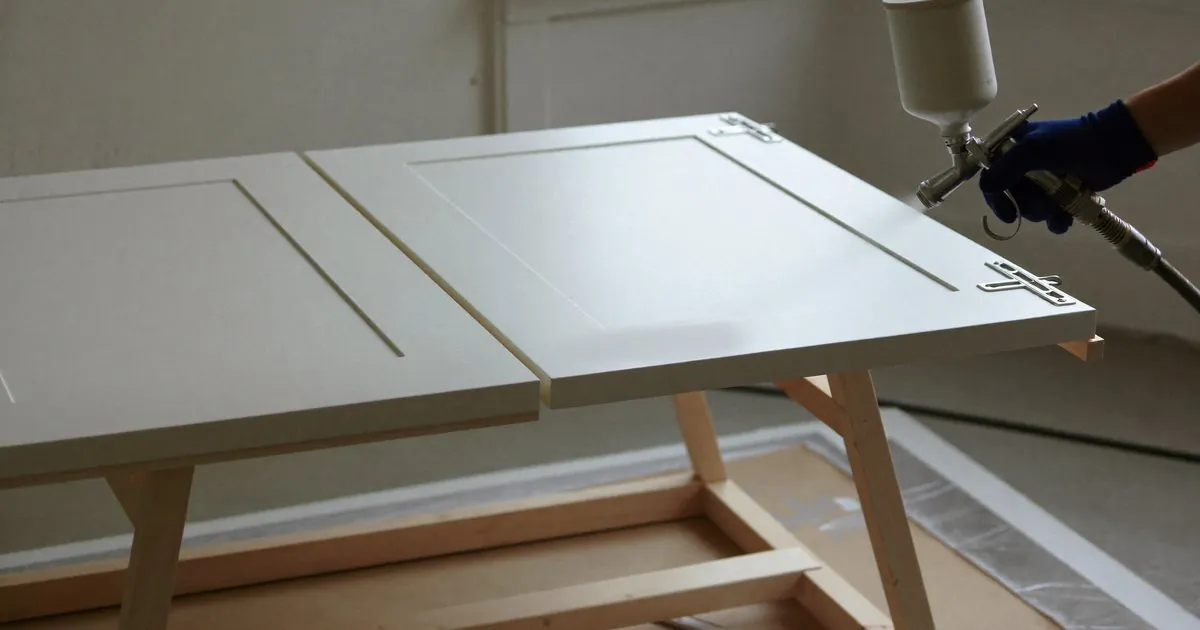
Image of kitchen cabinet doors on trestles during spray painting.

Image of kitchen cabinet doors being spray-painted. NLL Måleri does not offer kitchen cabinet door painting.

Quick answer
Identify the door material and existing finish, then select a compatible cleaning, preparation, primer and topcoat system. Follow its coat numbers and drying times. NLL Måleri does not offer kitchen cabinet door painting or lacquering.

About this guide: NLL Måleri does not offer painting or lacquering of kitchen cabinet doors. This advice covers DIY work and comparing other contractors.

How do you paint kitchen cabinet doors – and how long does it take?

The method and timescale depend on the door material, existing finish and selected coating. Use the product instructions to plan preparation, coats, drying, handling and full curing. A planning sequence is assessment, safe removal, cleaning, product-specific preparation, coating and curing. The actual tasks and products depend on the door surface.

For paint to adhere around handles and edges, doors need degreasing, sanding matt and priming with a product suited to the surface. NLL Måleri does not offer painting or lacquering of kitchen cabinet doors. This is a standalone DIY guide.

A glossy laminate door needs a system explicitly suitable for that laminate. A sound previously painted timber door may need different preparation; confirm compatibility and test adhesion rather than assuming one sequence suits both.

Can you repaint already painted kitchen cabinet doors yourself?

Yes, you can repaint kitchen cabinet doors yourself – provided the substrate, existing coating and selected system are compatible and the surface is prepared as instructed.

Remove unsound material using an appropriate method and investigate why it failed. Follow the chosen system’s preparation and repair instructions before recoating; do not automatically treat every stripped or repaired door as new timber.
What tools and paint do you need for kitchen cabinet doors?

Choose cleaners, abrasives, primer, topcoat and tools from the instructions for the actual surface and product system. A professional two-component coating is not a default recommendation for home DIY use. Kitchen doors are exposed to grease, cleaning, handling and moisture. The selected coating must be suitable for the actual material and intended use.

  • Degreasing: a compatible cleaner used at the stated dilution and with the required rinsing.
  • Sandpaper: the abrasive grade specified for the preparation stage and product.
  • Primer: a primer explicitly compatible with the actual substrate and topcoat, where required.
  • Topcoat: a coating intended for the door material and use. Check application, ventilation, protective equipment and curing instructions; sheen alone does not determine durability.
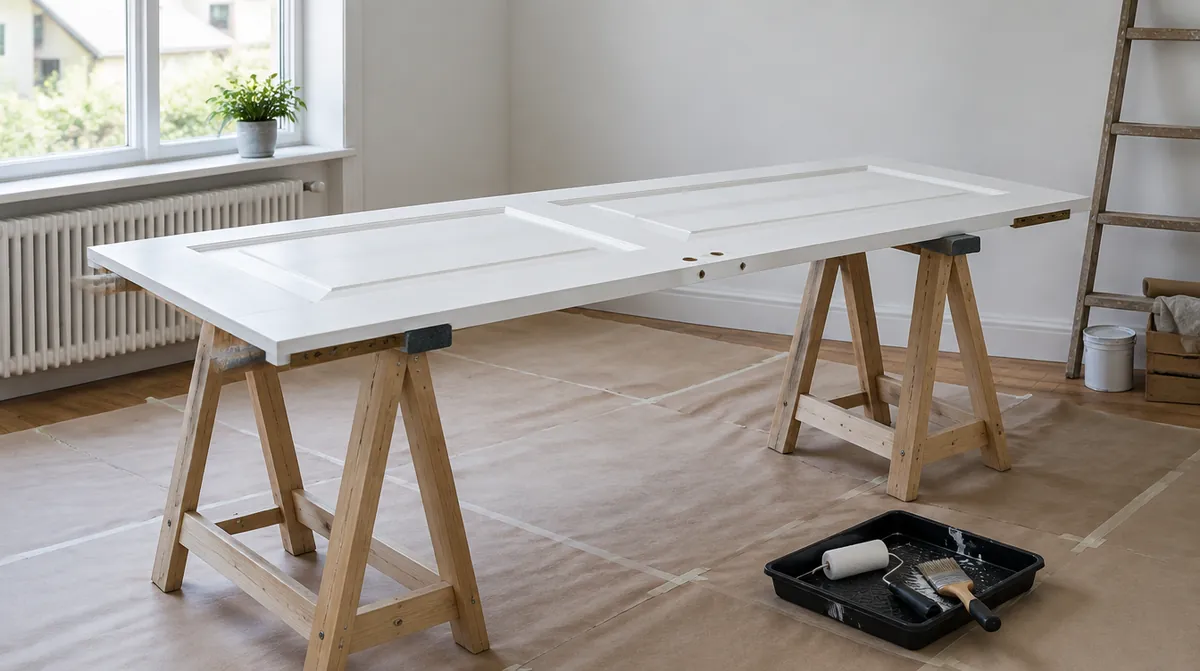
  • Tools: a foam or short-pile felt mini roller for flat sections, a narrow angled brush for mouldings and edges, or a sprayer if you have the equipment and space for masking.

Identify the cabinet-door substrate and retained coating, then choose preparation, primer and finish documented as compatible with that surface.

Is it better to wrap or paint kitchen cabinet doors yourself?

Wrapping kitchen cabinet doors yourself gives quick results without drying time, but the better option depends on surface condition, the specified coating or film, preparation and expected use and a free choice of colour.

Compare the particular wrapping and coating products, their preparation requirements and repair options. Neither method is universally more durable; damaged or swollen doors may need repair or replacement before either treatment.

The right primer for each surfaceCheck each substrate separately: laminate and melamine compatibility, MDF edges, timber condition and the adhesion of any existing paint. Follow the selected system rather than a universal primer rule.THE RIGHT PRIMER FOR EACH SURFACELaminate/melamineBonding primerMDFCheck edge treatmentTimberCheck the timber systemPreviously painted (matt)Check existing-coating compatibility
Identify the cabinet-door substrate and retained coating, then choose preparation, primer and finish documented as compatible with that surface.

How do you paint kitchen cabinet doors yourself, step by step?

Plan door painting around assessment, removal, cleaning, preparation, coating and curing. The product system determines any primer, number of coats and sanding between coats. Use a stable, suitable working arrangement and follow the coating’s application instructions. Protect adjacent surfaces and arrange the ventilation and protective equipment specified for the product.

  1. Remove doors and fittings. Number the backs so each door returns to its place.
  2. Degrease. Clean as instructed for the selected product, then rinse if required and allow the surface to dry.
  3. Prepare as instructed. Prepare the surface as directed by the coating system and remove dust safely.
  4. Prime. Apply the specified primer where required, including any edge treatment stated for the substrate.
  5. Apply the specified topcoats. Follow the product’s instructions for recoating and any sanding between coats.
  6. Cure. Wait for the paint to cure before refitting and normal use.

Choose tools suited to the product and door profile. Detail areas and flat panels may need different tools, as explained in the guide to painting internal doors. If handles change, agree how old holes will be repaired. Use a compatible repair material and preparation sequence. Sand between coats only as instructed for the selected system.

Does the same method work for other cupboard doors?

The assessment process is similar for kitchen, cupboard and wardrobe doors, but the material, existing coating and use can require a different system: assess, clean, prepare and coat according to the product instructions.

Check the actual surface and expected use, rather than assuming all cupboard doors share the same finish. Test compatibility and follow the selected system for any primer, edge treatment and topcoat.

Painting kitchen cabinet doors – 6 stepsDoor-painting checklist: assess and clean, prepare the substrate, prime if specified, apply the required topcoats and allow the stated curing time. Abrasive grades and drying times are product-specific.PAINTING KITCHEN CABINET DOORS – 6 STEPS11. RemoveLabel doors and fittings22. CleanFollow product instructions33. PrepareUse the specified method44. PrimeOnly where specified55. FinishApply specified topcoats66. CureProduct-specific curing
Follow the selected system’s complete instructions.

Spraying or brush and roller – which gives kitchen doors the best finish?

Image of kitchen cabinet doors on trestles during spray painting.
Image of kitchen cabinet doors being spray-painted. NLL Måleri does not offer kitchen cabinet door painting.

Spraying produces a smooth, factory-like finish; brush and roller cost less but leave visible strokes and texture. The difference is clearest on large, flat doors in side light from a window.

Spraying gives a thin coat without brush marks but requires masking, ventilation and experience; overspray settles on everything nearby. A foam roller and brush work well on moulded and panelled doors, where spraying still needs finishing work.

Workshop spraying is carried out by specialist finishing firms. Brush and roller are alternatives for painting the doors yourself.

For example, flat high-gloss white doors benefit most from spraying. A few doors in a small kitchen rarely justify spray equipment and masking; a roller and good brush are quicker overall.

What do kitchen cabinet doors look like before and after painting?

The result depends on the original material, damage, preparation and chosen finish. A new coating can provide a smooth, fresh surface in your chosen colour.

Spraying, rolling and brushing can produce different textures. Choose a method suitable for the coating and desired finish, and allow the product’s specified full curing time before normal wear.

Spraying versus brush and rollerSpraying gives an even factory finish but requires more equipment and extensive masking; brush and roller are simpler but leave visible strokes and suit moulded doors.SPRAYING VERSUS BRUSH AND ROLLERFinishSpray: smooth · Roller: visible strokesEquipmentSpray: more · Roller: simpleMaskingSpray: extensive · Roller: limitedBest forSpray: flat doors · Roller: mouldings
The finish determines the choice.

How long should kitchen cabinet doors dry before you use the kitchen?

Follow the selected product’s recoating, handling and full-curing times at the actual temperature and humidity. Do not treat one timetable as suitable for every cabinet-door system. Check the product’s technical and safety data sheets before planning the work. For walls and ceilings, NLL Måleri offers interior painting in Helsingborg.

Paint feels dry long before it is cured. The surface is sensitive during the first weeks: close doors carefully and avoid scrubbing. High humidity and low temperature extend all times; advice on indoor conditions for interior painting in winter is in a separate guide.

Do not refit or stack freshly painted doors until the product permits handling and contact. A surface that feels dry can still mark or stick.

Drying and curing times for kitchen cabinet doorsFollow the selected product’s recoating, handling and full-curing times at the actual temperature and humidity. Do not treat one timetable as suitable for every cabinet-door system.DRYING AND CURING TIMES FOR KITCHEN CABINET DOORSSee recoat timeBetween coatsSee handling timeBefore refittingProduct-specific curingFull curing
Paint feels dry long before it is fully cured.

What are the most common mistakes when painting kitchen cabinet doors?

The four most common mistakes are failing to degrease, insufficient sanding, the wrong primer on laminate and overly thick coats. These choices can impair adhesion or finish quality. The necessary preparation and application must be checked against the selected system.

  • No degreasing: cooking deposits and grease prevent adhesion, often only becoming visible after a few months.
  • Insufficient sanding: remaining gloss prevents mechanical adhesion.
  • Wrong primer: ordinary primer flakes on laminate; use bonding primer.
  • Thick coats: paint runs and cures slowly; two thin coats beat one thick coat.

Do not assume a topcoat will bond to an unknown existing finish without preparation. Check compatibility and complete the specified cleaning and preparation, then test a suitable area before continuing.

The simplest DIY kitchen-door tip is to spend time on preparation rather than an extra coat of paint.

When is hiring a painter for kitchen cabinet doors worthwhile?

Hiring a painter is worthwhile when there are many doors, when glossy laminate makes adhesion difficult or when the whole kitchen is being repainted. Choose a firm that explicitly offers kitchen cabinet door painting or lacquering. NLL Måleri does not carry out this work.

Conditional ROT example: if 10,000 SEK of labour is eligible and the customer qualifies for the full 30% deduction with enough allowance remaining, the deduction is 3,000 SEK and the labour payment is 7,000 SEK. Materials are excluded. Confirm that the specific work qualifies; workshop treatment must not be assumed eligible. See the guide to ROT tax deduction for painting in 2026. NLL’s indicative labour price for interior walls and ceilings is 250–437.50 SEK/m² including VAT before any applicable ROT. Materials and other costs are additional.

NLL offers painting of interior walls and ceilings; kitchen cabinet door painting and lacquering are excluded. The wall and ceiling service is described under interior painting in north-west Skåne, with prices under interior painting prices per m² in Skåne.

What does professional kitchen cabinet door painting cost?

NLL Måleri does not quote for kitchen cabinet door painting. Ask a firm that paints or lacquers doors to specify preparation, paint system, transport and refitting in its quote.

Workshop finishing must be quoted by a specialist firm based on the number of doors, surface and requested treatment.

Is it worth making new kitchen doors yourself or painting the old ones?

Repainting kitchen cabinet doors is usually worthwhile: worth comparing with replacement when the existing doors are sound, because the units, measurements and hinges already fit.

Compare the actual preparation, coating, drying and fitting work with the cost and work involved in replacement. Swollen, damaged or structurally unsuitable doors need assessment; painting does not restore their original shape.

ROT deduction on labour (example)

If 10,000 SEK of labour is eligible and the customer qualifies for the full 30% ROT deduction with sufficient allowance, the deduction is 3,000 SEK and the labour payment is 7,000 SEK. Materials are excluded; confirm eligibility for the actual work.

Labour cost10,000 SEK
Conditional ROT −30%−3,000 SEK
You pay7,000 SEK
Limit/person/year50,000 SEK
Interior painting – price per m² (including VAT)

NLL’s indicative labour price for interior walls and ceilings is 250–437.50 SEK/m² including VAT before any applicable ROT. Materials and other costs are additional.

Walls (from)250 SEK/m²
Interior (range)250–437.50 SEK/m²

How to do it step by step

  1. Remove doors and fittings · Unscrew all kitchen doors and handles. Number the backs so each door returns to the correct position.
  2. Degrease the surface · Use the specified compatible cleaner, dilution and rinsing method. Allow the surface to dry as required.
  3. Use the specified abrasive grade · Follow the coating instructions for surface preparation and abrasive grade, then remove dust safely.
  4. Apply bonding primer · Apply the primer and edge treatment specified for the actual substrate, where required.
  5. Apply specified topcoats · Apply the specified topcoat in the number and thickness of coats required by its instructions. Sand between coats only if instructed.
  6. Allow curing before refitting · Follow the product’s handling and full-cure times before refitting, stacking or exposing the doors to normal wear.

Frequently asked questions

Must kitchen cabinet doors be sanded before painting?

Preparation depends on the laminate and coating system. Use a product explicitly compatible with the surface, follow any abrasion and primer requirements and test adhesion first.

Which paint is best for kitchen cabinet doors?

Choose a coating approved for the actual door surface and expected use. Follow its technical and safety instructions; a professional two-component product should not be treated as a universal DIY choice.

Do laminate doors need primer?

Some laminate and melamine surfaces need a compatible bonding primer; suitability is product- and substrate-specific. Confirm the intended use and test adhesion before coating the doors.

How long do painted kitchen cabinet doors last?

Service life depends on preparation, compatibility, curing, use and maintenance. No fixed lifespan can be promised for an unspecified surface and coating.

Is it worth painting kitchen cabinet doors yourself or hiring a professional?

Compare the preparation, paint system, time and price offered by a firm that explicitly paints kitchen doors. NLL Måleri does not offer this service. Any ROT deduction must be checked for the actual work and customer; do not assume workshop treatment qualifies.

Is painting kitchen cabinet doors yourself difficult?

No, the stages are straightforward; patience is the challenge: degreasing, sanding, thin coats and drying times that cannot be shortened. Plan the work from the actual number of doors, preparation and product drying times. Test a discreet area before continuing. A specialist door-finishing firm can assess the work; NLL Måleri handles walls and ceilings, not kitchen cabinet doors.

How do I refinish kitchen cabinet doors myself?

Refinishing starts with identifying the surface and existing finish. Select a compatible preparation and coating system and follow its instructions. Product names such as enamel do not by themselves establish compatibility or a method. Check the actual technical data sheet. Workshop finishing is a specialist service; NLL Måleri does not offer kitchen cabinet door painting or lacquering.

Updated

Request a fixed price

Estimate your project cost

Estimate your project cost

Select the service, scope and customer type. The calculator loads here.

Request a quote