
We count visits to see which pages are helpful – nothing is sold on. Privacy policy

NLL Guides · COSTS & ROT

ROT tax deduction for painting in 2026 — how it works, step by step

Dorde Lalic, founder and owner of NLL MåleriDorde Lalic founder and ownerNLL Måleri · · 6 min readLinkedIn
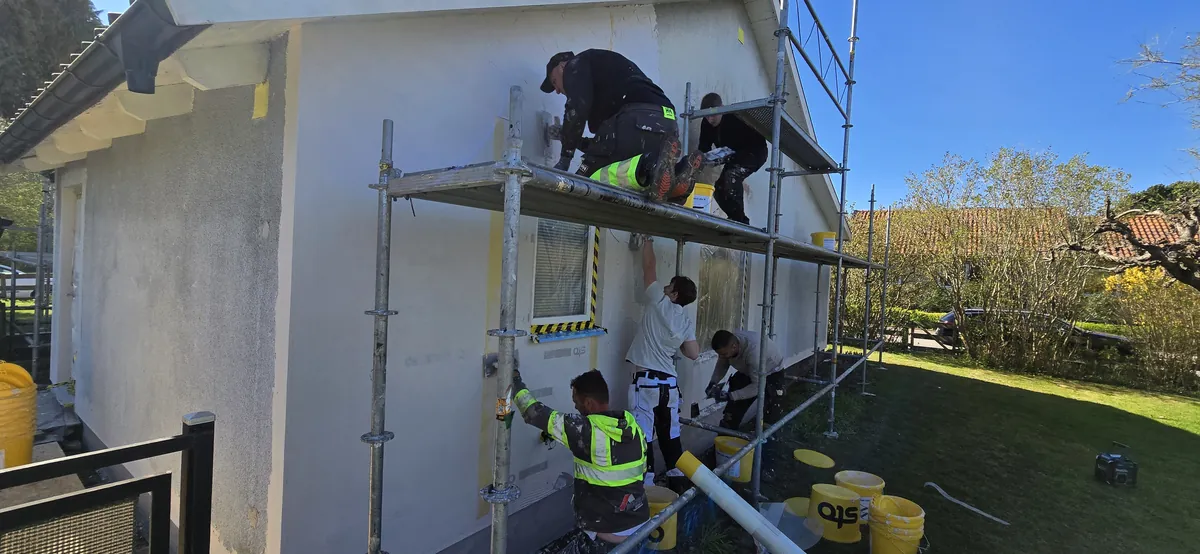
Work from scaffolding beside light-coloured rendered walls in Ängelholm.

Project photo from Ängelholm showing exterior wall work from scaffolding.

Quick answer

In 2026, ROT can reduce qualifying painting labour by up to 30%, subject to eligibility and a maximum of 50,000 SEK per person per year. Materials are excluded. The home, ownership and type of work matter; there is no blanket rule that every home must be older than five years.

  • Up to 30% on qualifying labour – the reduction is calculated only on labour, never paint or materials.
  • Cap of 50,000 SEK/year – per person per year, within the combined ROT/RUT cap. Two owners must each qualify, pay their share and have enough tax capacity and remaining allowance.
  • No longer 50% – the temporary 50% rate ended on 31 December 2025; the ordinary 30% rate applies from 2026.
  • Check the home and type of work – ownership, use of the home and the work category matter. A blanket five-year rule does not apply to all maintenance.
  • Deduction on the invoice – agree any eligible deduction on the invoice. The contractor requests payment from Skatteverket after the work is completed and you have paid your share electronically.

What is the ROT deduction and what painting work does it cover?

ROT is a Swedish tax reduction for renovation, conversion and extension work in your home. For decorating, it covers painting, wallpapering and filling. Skatteverket may pay up to 30% of qualifying labour in 2026 when the conditions are met; materials, travel and equipment are excluded.

The Swedish Tax Agency has administered the reduction since 2008; ROT stands for the Swedish words for renovation, conversion and extension. For a private customer, this means the state subsidises labour when renovating an existing home, with painting among the clearest categories covered.

The work category and property type determine eligibility. Qualifying work may include interior painting and wallpapering and old wallpaper removal. Preparation may qualify as part of eligible work. Exterior work on a privately owned small house has different scope conditions from work in a tenant-owned apartment; check the relevant property category.

The distinction is strict: only working time qualifies. Paint, priming oil, filler, brushes and protective coverings are excluded and billed in full. If materials are included in an agreed overall contract, the quote must still separate the items, otherwise the deduction risks rejection.
ROT deduction rates over timeTimeline of the ROT deduction: administered by the Swedish Tax Agency since 2008, the temporary 50% rate ended on 31 December 2025, and the ordinary 30% of labour applies from 2026.ROT DEDUCTION RATES OVER TIME2008Swedish Tax Agency introduces ROT50 %Temporary increased rate31 December 2025Increase ends30 %Ordinary rate from 2026
ROT has existed since 2008: the temporary 50% rate ended on 31 December 2025 and returned to 30% in 2026.
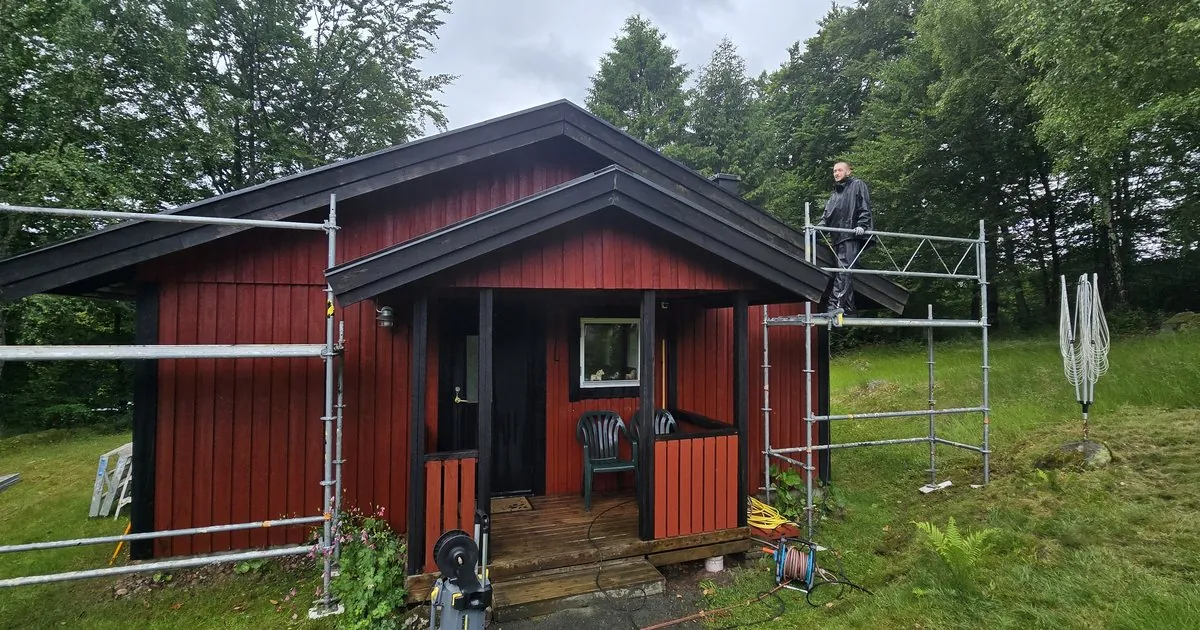
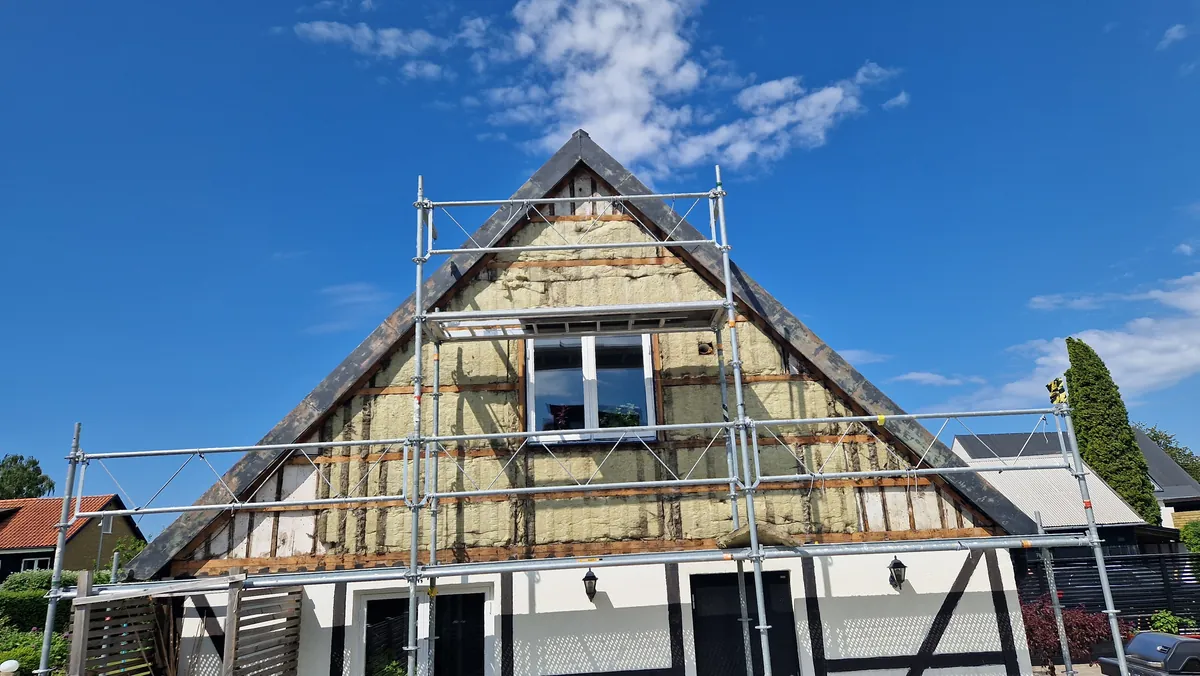
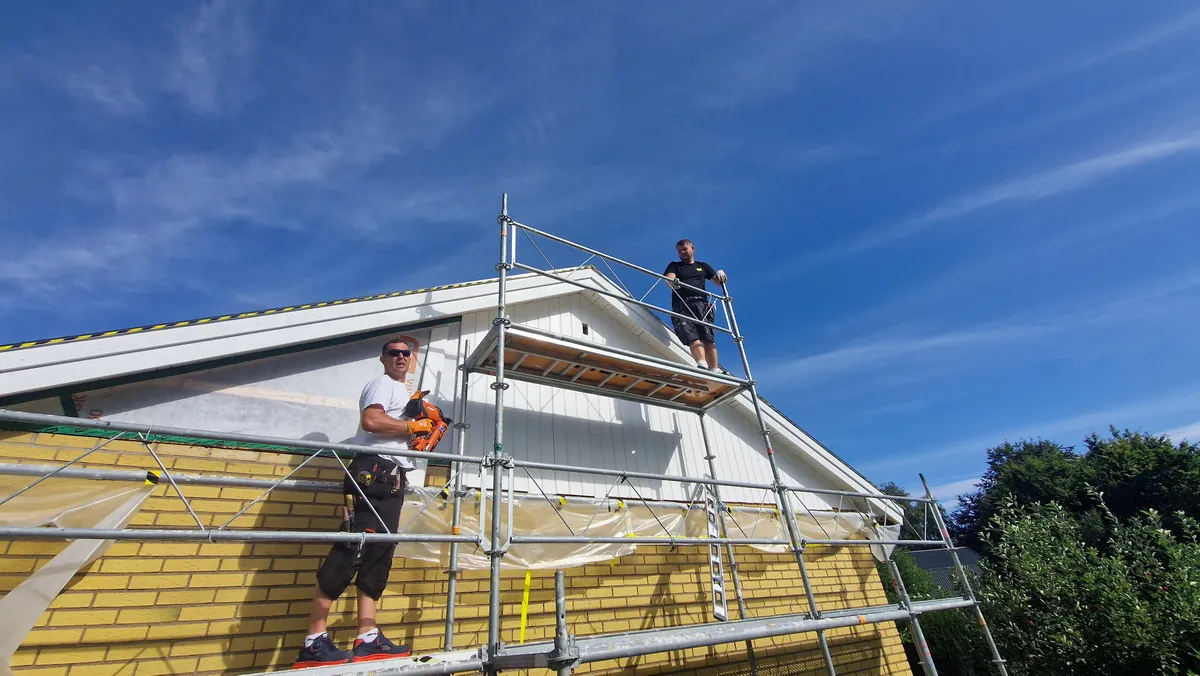
House gable with exposed timber structure and scaffolding in Hjärup.
Project photo from Hjärup during exterior renovation and cladding work.

How much is the ROT deduction for painting in 2026?

The ROT deduction for painting in 2026 is up to 30% of qualifying labour, limited by eligibility, tax capacity and remaining allowance. ROT is capped at 50,000 SEK per person per year, within the combined ROT/RUT cap of 75,000 SEK. Two owners must each qualify; the household does not automatically receive a joint allowance.

The 2026 ROT rate is up to 30% of qualifying labour. The rate and the annual monetary cap are separate limits. Check both, together with any ROT and RUT already used, before calculating a deduction for your project.

How much is the ROT deduction for painting in 2026
SituationPercentage of labour costsAnnual cap
One owner in the home30 %50,000 SEK
Two owners in the same householdUp to 30% of qualifying labourUp to 100,000 SEK only if both fully qualify
Temporary rate until 2025-12-3150 %50,000 SEK

With full eligibility and sufficient allowance, labour costing 60,000 SEK gives a 30% deduction of 18,000 SEK, leaving 42,000 SEK plus materials to pay. Splitting a deduction between owners is not automatically better: each person’s ownership, payment, tax capacity and remaining allowance must support their share. See painting price examples in the area.

Worked example: painting labour of 60,000 SEK

Conditional example: 60,000 SEK of qualifying labour gives an 18,000 SEK deduction and 42,000 SEK payable if the full 30% can be used. Materials are extra. The 50,000 SEK personal cap does not create automatic entitlement; two owners must each fully qualify.

Labour cost60,000 SEK
30% ROT deduction18,000 SEK
Remaining to pay42,000 SEK
Cap, one owner50,000 SEK
Two fully qualifying owners100,000 SEK

What counts as labour, and what is excluded?

Labour is the time the painter spends preparing, filling, priming and painting, and only that qualifies for ROT. Paint, filler, wallpaper, brushes, scaffolding and travel outside working time do not qualify and are billed separately without a reduction.

Time at your home is decisive: the hours a professional painter spends on preparation and finishing coats. The Swedish Tax Agency strictly separates this working time from all physical materials consumed on site.

To avoid misunderstandings when invoicing, know which items fall on each side.

What counts as labour, and what is excluded
Qualifies for ROT (labour)Does not qualify (materials/other)
Filling, sanding, primingPaint from Nordsjö, STO or Jotun
Wallpapering and wallpaper removalFiller, priming oil, adhesive
Interior and exterior paintingBrushes, rollers, masking tape
Removing coverings and protecting surfaces on siteScaffolding and hired equipment

Ask for an itemised quote and invoice showing labour, materials and other costs separately. This also applies to a small job priced by the hour: an hourly rate does not remove the need to identify the qualifying labour amount. Clear documentation supports an application but does not guarantee approval.

Eligible labour versus ineligible materialsComparison of items qualifying for ROT—filling, sanding, priming, wallpapering and removal, and interior and exterior painting—and excluded items: paint from Nordsjö, STO or Jotun, brushes, rollers, masking tape, scaffolding and hired equipment.ELIGIBLE LABOUR VERSUS INELIGIBLE MATERIALSQualifies for ROTFilling, sanding, primingQualifies for ROTWallpapering and wallpaper removalQualifies for ROTInterior and exterior paintingNo deductionPaint from Nordsjö, STO or JotunNo deductionBrushes, rollers, masking tapeNo deductionScaffolding and hired equipment
Only qualifying labour can receive ROT, up to 30% when the conditions are met. Materials and equipment are excluded.
Painter working from scaffolding beside a light-coloured gable in Billinge.
Project photo from Billinge. Working height and access affect planning.

Who qualifies for the ROT deduction for painting?

ROT depends on the individual’s ownership and use of the home, the qualifying work, tax capacity and remaining allowance. New-build work and work on younger properties have specific rules; check the property and work type. A rented home does not qualify for the tenant’s ROT deduction. Work commissioned by a business or housing association does not qualify for that organisation’s ROT deduction.

Check ownership, use of the home, the eligible work, tax capacity, remaining allowance and payment requirements. The permitted work differs between small houses, owner-occupied apartments and tenant-owned apartments.

Check these common eligibility boundaries:

  • Rented homes never qualify for ROT because the tenant does not own the home.
  • The five-year restriction is not a blanket exclusion for every painting job in every type of home. For a younger small house, repairs and maintenance must restore its original condition; alterations and extensions have a separate five-year restriction. New construction and completion work do not qualify. Check the applicable property and work category with the Swedish Tax Agency.
  • Work commissioned by a business or a housing association is also excluded.

Joint owners may share a deduction only when each meets the relevant ownership, payment, tax and allowance conditions. Check the amounts already used or committed and confirm the allocation before invoicing; joint ownership does not automatically double entitlement.

Who qualifies for ROT on painting, and who is excluded?Eligibility checklist: ownership and use of the home, qualifying work, sufficient tax capacity and remaining allowance. New construction is excluded. Younger properties have specific rules; age alone is not a blanket exclusion for all maintenance.WHO QUALIFIES FOR ROT ON PAINTING, AND WHO IS EXCLUDED?Eligibleprivate customers and homeownersProperty requirementsCheck property and work categoryExcludedRented homeExcludedNew construction and completion workExcludedbusinesses or housing associations
Eligibility depends on the person, property, work and payment conditions. The five-year restriction is not a blanket rule for all painting or maintenance.

The ROT invoice process: what needs to be agreed

The invoice model separates your payment from any eligible ROT amount: the quote and invoice identify qualifying labour separately. After the work is completed and your share is paid electronically, the contractor can request the eligible amount from Skatteverket. Approval is conditional.

Use this checklist for The ROT invoice process in five steps — a checklist for preparing the application and separating eligible labour from other costs. Approval depends on the work and your circumstances. You pay the agreed share for completed work before the contractor requests payment from the Swedish Tax Agency, and you should check your tax return. As a painting company serving private customers based in Kvidinge, NLL can specify the agreed labour and materials in your project quote. Check these items before work starts:

  1. Confirm the scope and how the surfaces will be measured.
  2. Ask for a written quote separating labour, materials and other costs.
  3. Provide the information needed to check the relevant person and property.
  4. Confirm which completed tasks qualify for ROT.
  5. Check the conditional deduction, pay your share electronically after the work, and retain the invoice.

Keep labour, materials and other costs separate in the quote and invoice. Also check ownership, the work category, remaining allowance, tax capacity and payment requirements. Missing information or unmet conditions may affect the deduction; an itemised invoice alone does not guarantee approval.

The arrangement is the same for interior house painting and qualifying exterior work in north-west Skåne, but eligibility must be assessed for the relevant person, property and tasks. The invoice model does not guarantee that a claimed deduction will be approved. For indoor work, read about painting interior walls and ceilings.

The ROT invoice process in five stepsFive points in the ROT invoice process: assess the scope, separate labour and materials, check person and property details, identify qualifying completed work, and check the deduction and electronic payment. Skatteverket approval remains conditional.THE ROT INVOICE PROCESS1Step 1 · Site visitfree site visit2Step 2 · Quotelabour and materials listed separately3Step 3 · Approvalpersonal identity number4Step 4 · Workfilling, priming and painting5Step 5 · InvoiceEligible amount, if approved
Agree any eligible deduction in the invoice. The contractor applies after completion and your electronic payment; Skatteverket decides eligibility.

Frequently asked questions

Must I pay the full amount first and reclaim ROT through my tax return?
Under the invoice model, an eligible deduction is taken from qualifying labour on the invoice. You pay your share electronically, including materials and other non-qualifying costs. The contractor applies to Skatteverket after completion and payment. Check your tax return and final entitlement.
Does ROT apply if I only wallpaper or fill surfaces?
These tasks can qualify when the person, property and work meet the conditions. ROT is up to 30% of qualifying labour in 2026, within available tax capacity and allowance. Wallpaper, adhesive and filler are materials and do not qualify.
How much ROT allowance do I have left this year?
ROT is capped at 50,000 SEK per person per calendar year. The combined cap for ROT and RUT is 75,000 SEK per person per year. Check deductions already used or committed before estimating the remaining allowance. Mina sidor shows the information registered with the Swedish Tax Agency; final eligibility also depends on your tax capacity and other conditions.
Can a housing association or business get ROT for painting?
A housing association or business cannot claim ROT for its costs. ROT is a personal tax reduction subject to ownership and use of the home, eligible work and other conditions. A tenant cannot claim ROT for work in a rented home; communal areas are not an individual apartment owner’s eligible interior work.
Why is ROT only 30% in 2026?
During part of 2025, ROT temporarily increased to 50% of labour. That time-limited increase ended on 31 December 2025. The ordinary 30% rate returned in 2026, with the unchanged cap of 50,000 SEK per person per year.

Updated

Request a fixed price

Estimate your project cost

Estimate your project cost

Select the service, scope and customer type. The calculator loads here.

Request a quote