
We count visits to see which pages are helpful – nothing is sold on. Privacy policy

NLL Guides · GUIDE

Synthetic resin paint or mineral paint on render – which should you choose in Skåne?

Dorde Lalic, founder and owner of NLL MåleriDorde Lalic founder and ownerNLL Måleri · · 7 min readLinkedIn
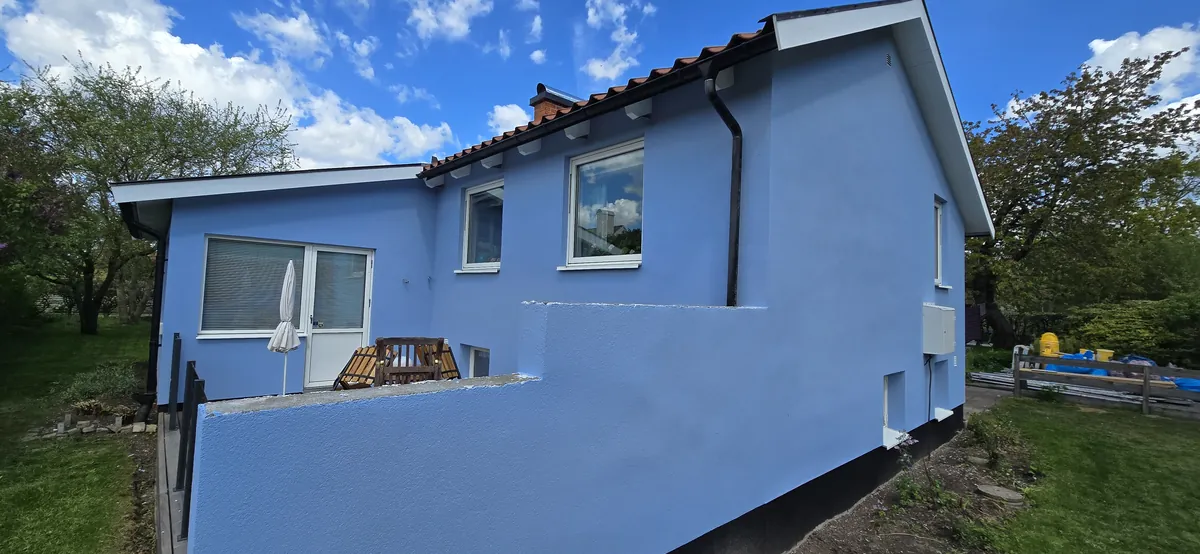
Blue-painted rendered walls with white windows on a detached house in Ängelholm.

Project photo from Ängelholm: the rendered façade colour alongside windows and plinth.

Quick answer

Choose a façade-paint system compatible with the render and existing coating. Check documented water-vapour permeability, water absorption and substrate requirements; the binder name alone does not establish suitability.

  • Check vapour permeability – check the specified product’s vapour-permeability class and its suitability for the complete wall construction.
  • Check each product – acrylic products have different performance characteristics; do not classify every acrylic coating as impermeable.
  • Plan maintenance – maintenance depends on the actual product, substrate, preparation and exposure; no universal lifespan is established here.
  • The surface determines the choice – confirm compatibility with both the render and any existing coating before selecting a complete system.
  • Examples of manufacturers: STO, Jotun, Nordsjö – specify a compatible system and its preparation in the project quote. No exclusive product supplier or universal brand recommendation is established here.

What is the difference between plastic-based and mineral paint on render?

The binder is one part of the specification. Render type, existing paint, water-vapour permeability, water absorption and exposure all affect the choice. Product data must support suitability for the actual wall; the same applies to a rendered façade in Höganäs in a weather-exposed position.

Acrylic, silicate and silicone-resin façade paints are broad product categories. Their performance varies by formulation and complete system, so compare the manufacturer’s declared properties and permitted substrates.

Silicate systems can rely on bonding with suitable mineral substrates, but their permitted existing coatings and preparation differ by product. Silicone-resin paints form a separate category; do not treat every silicone-resin or acrylic product as having identical permeability or rain resistance.

The table below compares the three paint types on the factors that determine the choice.

What is the difference between plastic-based and mineral paint on render
Paint typeBinder and surfaceSuitability for rendered façades
Plastic-based paint (acrylic)Check the specific product propertiesConfirm substrate and coating compatibility
Silicate paint (mineral)Follow the silicate system’s substrate requirementsConfirm permitted mineral substrates
Silicone resin paintCheck declared water absorption and permeabilityCheck declared rain resistance and compatibility

For the complete process from priming to finishing, read more about rendered façade painting in the area.

Plastic-based versus mineral paint on renderComparison checklist: identify the render and existing coating, then compare product-documented substrate compatibility, vapour permeability and water absorption for acrylic, silicate and silicone-resin systems. No whole category is universally best.PLASTIC-BASED VERSUS MINERAL PAINT ON RENDERPlastic-based paint (acrylic)Check the specific product propertiesSilicate paint (mineral)Follow the silicate system’s substrate requirementsSilicone resin paintCheck declared water absorption and permeability
The complete system and its documented suitability matter more than a broad binder label.
Blue-painted rendered walls with white windows on a detached house in Ängelholm.
Project photo from Ängelholm: the rendered façade colour alongside windows and plinth.

Why should a rendered façade breathe through vapour-permeable paint?

The coating must suit the moisture behaviour of the actual wall construction, including rain exposure, drying routes and any underlying damp defects. A coating choice alone cannot diagnose or repair a moisture problem.

Moisture can enter a rendered wall through defects, rain exposure or other routes. Assess the source and condition before choosing a repair or coating; visible damp cannot be diagnosed from the paint category alone.

The sd value describes water-vapour diffusion resistance as an equivalent thickness of air. Compare the documented system values and water-absorption properties for the actual wall; neither acrylic nor mineral is a sufficient specification on its own.

The wall must be able to manage rain and dry as intended. Check cracks, junctions and persistent damp before repainting. Where an underlying water defect exists, have its cause addressed rather than relying on paint to conceal it.

Vapour-permeable paint versus an impermeable plastic filmAssess moisture management using the complete wall construction, coating permeability, rain absorption and the source of any damp. Product-specific values are required; the broad binder category alone is insufficient.VAPOUR-PERMEABLE PAINT VERSUS AN IMPERMEABLE PLASTIC FILMCheck vapour permeabilitylets water vapour throughCheck water absorptionUse the declared system dataInvestigate visible defectsblistering, flaking and detachment in sheets
Use the declared sd value together with water absorption, substrate compatibility and the wall’s construction.

Which paint reduces the risk of moisture damage in render?

A compatible system and sound moisture management reduce avoidable coating problems, but no binder category alone guarantees protection from damp or frost damage. Diagnose the wall and specify repairs before painting.

Water in susceptible masonry or render can contribute to freeze–thaw damage. The likelihood depends on the material, saturation, exposure and defects; this guide does not establish the most common cause for every façade in Skåne.

A vapour-permeable coating can be part of a suitable wall specification, but it does not remove all moisture risks. Check water entry, render condition and the complete system before selecting a finish.

Match the repair and coating to the actual wall construction. Recurring cracks, detached render or persistent damp need assessment before painting. Agree the repair scope as part of the façade renovation.

The four stages of frost damagePossible freeze–thaw mechanism: water enters a susceptible surface, freezes, expands and can contribute to damage. This is not a diagnosis of the photographed project or a claim that all acrylic coatings cause frost damage.THE FOUR STAGES OF FROST DAMAGE11. Moisture is trappedentering a susceptible surface22. Frostfreezes as temperatures fall33. Pressureice expands44. Damage becomes visiblepaint and render flake off
Assess local exposure and material condition; no fixed regional damage frequency is established here.
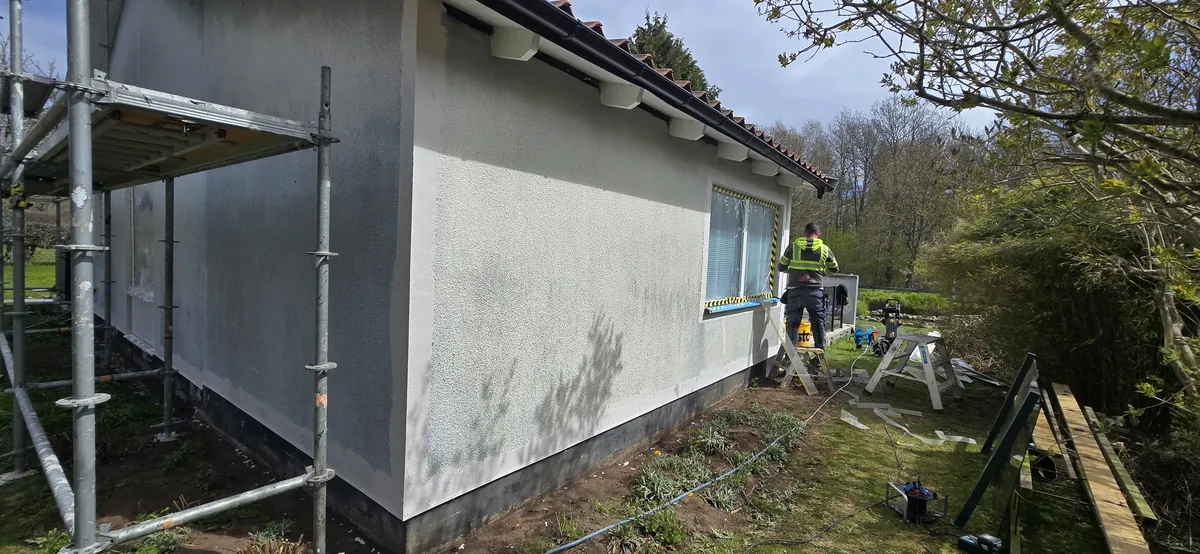
Light-coloured rendered wall with visible discolouration and uneven areas in Ängelholm.
Project photo from Ängelholm. The condition of the surface finish needs assessing before a new treatment.

Which paint lasts longest on a rendered façade in Skåne?

No single paint category has a guaranteed maintenance interval on every rendered façade, because the specified product, preparation, existing surface and exposure determine performance. Use the product’s maintenance guidance and inspect the actual building.

Different coatings can chalk, lose adhesion or deteriorate in other ways. Identify the cause and whether the existing layer is sound before deciding on cleaning, repairs or removal.

Local exposure is one input to the specification. For a façade around Helsingborg and Höganäs, assess the actual orientation, rain exposure, render and existing coating instead of promising a lifespan from location alone.

The comparison below lists assessment points, not verified maintenance intervals for entire paint categories.

Which paint lasts longest on a rendered façade in Skåne
Paint typeMaintenance basisHow it ages
Silicate paintProduct-specificCheck chalking and adhesion
Silicone resin paintInspect conditionCheck the specified system
Plastic-based paint (acrylic)Inspect conditionInvestigate any deterioration

For an idea of the total cost for your façade, see the cost overview under example façade renovation price.

Lifespan by paint type on render in SkåneMaintenance assessment for silicate, silicone-resin and acrylic systems: check the specific product, adhesion, surface condition, rain exposure and manufacturer’s maintenance guidance. No universal number of years is given.LIFESPAN BY PAINT TYPE ON RENDER IN SKÅNEProduct-specificSilicate paintInspect conditionSilicone resin paintInspect conditionPlastic-based paint (acrylic)
Plan maintenance from the actual product specification and inspections, not a universal binder-based lifespan.

Which paint does NLL Måleri recommend for rendered façades?

Ask NLL Måleri to specify the system for the actual rendered façade: the quote should identify the preparation, primer, finish and any required repairs. This guide does not establish an exclusive brand policy or one system suitable for every building.

Specify the render, existing coating, exposure and required system properties first. Then check the selected manufacturer’s instructions for permitted substrates, preparation, priming and finishing.

Before accepting the specification, confirm how the assessment covers these four points:

  • tapping to find detached and loose areas,
  • mapping cracks and previous repairs,
  • checking signs of damp and any tests needed, and
  • identifying what is already on the wall.
Check system compatibility

Use the paint type the surface requires, otherwise the new coat will peel prematurely. For rendered façades, verify compatibility with the actual substrate and previous coating. Some silicate systems require particular mineral surfaces; others have different permitted uses. Follow the selected product’s instructions rather than substituting one binder category automatically.

The existing coating can affect preparation and the new system. Agree the scope in a written quote and compare what rendered façades cost per square metre, subject to the agreed scope. Any ROT deduction depends on eligibility and remaining allowance. Ask for the schedule and any warranty terms in writing before work starts.

Four stages of the site visitAssessment checklist: check adhesion and detached areas, cracks and previous repairs, signs of damp, and the existing coating. Confirm the necessary investigation and specification for the actual building.FOUR STAGES OF THE SITE VISIT11. Tappingtapping to find detached and loose areas22. Cracksmapping cracks and previous repairs33. Moisture measurementCheck damp and investigation needs44. Existing coatingidentifying what is already on the wall
Use the assessment to agree the repair scope and compatible paint system before pricing.

Frequently asked questions

Is mineral or plastic-based paint best for rendered façades?
No broad paint category is best for every rendered façade. Select a system compatible with the render and existing coating, using documented vapour-permeability, water-absorption and substrate requirements.
Can mineral paint (silicate) be applied over old plastic-based paint?
It depends on the selected product and the existing layer. Check whether the system permits that substrate, including any required primer or removal. Do not assume all silicate or silicone-resin products can be substituted for one another.
Why should a rendered façade breathe?
The coating should support the moisture behaviour intended for the actual wall. Compare declared vapour permeability and rain absorption, and investigate persistent damp or defects before repainting.
Which paint cracks least on render?
Cracking and peeling can have several causes, including movement, moisture, poor adhesion or unsuitable preparation. No paint category universally prevents them; assess the substrate and specify a compatible repair and coating system.
ROT deduction and conditions in 2026

For rendered façade painting, agree the surface preparation, paint system, scope and price in writing. Any ROT deduction is conditional; scheduling and warranty terms must be confirmed for the project.

ROT deduction on labour costs30 per cent
Maximum amount50,000 SEK per person
Pricing modelfixed price
Warranty for larger contractsConfirm in writing
Warranty for smaller jobsConfirm in writing

Updated

Request a fixed price

Estimate your project cost

Estimate your project cost

Select the service, scope and customer type. The calculator loads here.

Request a quote