
We count visits to see which pages are helpful – nothing is sold on. Privacy policy

NLL Guides · GUIDE

Repair or replace exterior render – when is each worthwhile?

Dorde Lalic, founder and owner of NLL MåleriDorde Lalic founder and ownerNLL Måleri · · 7 min readLinkedIn
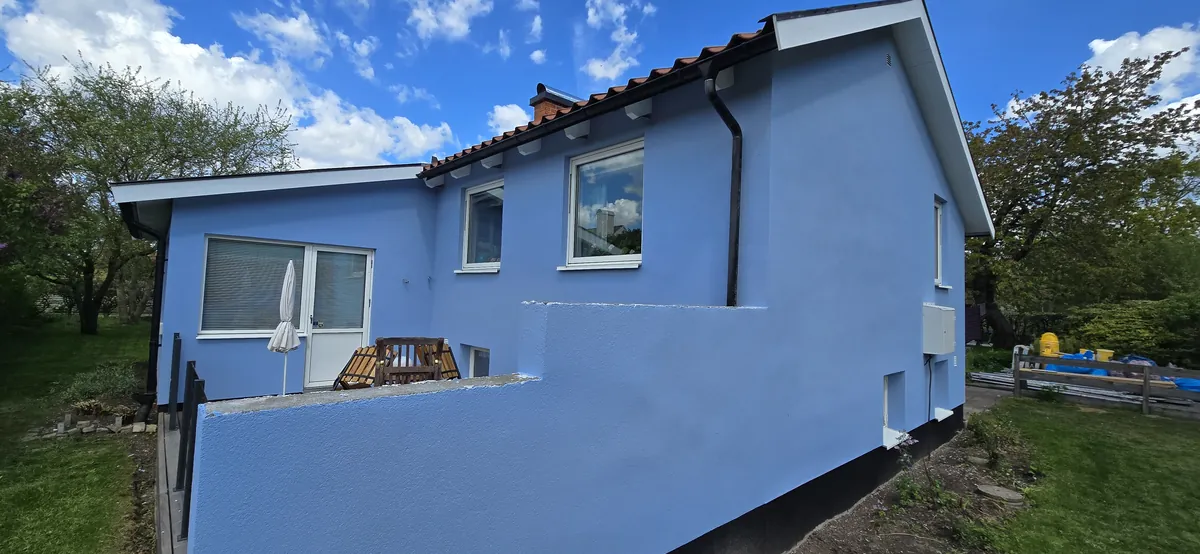
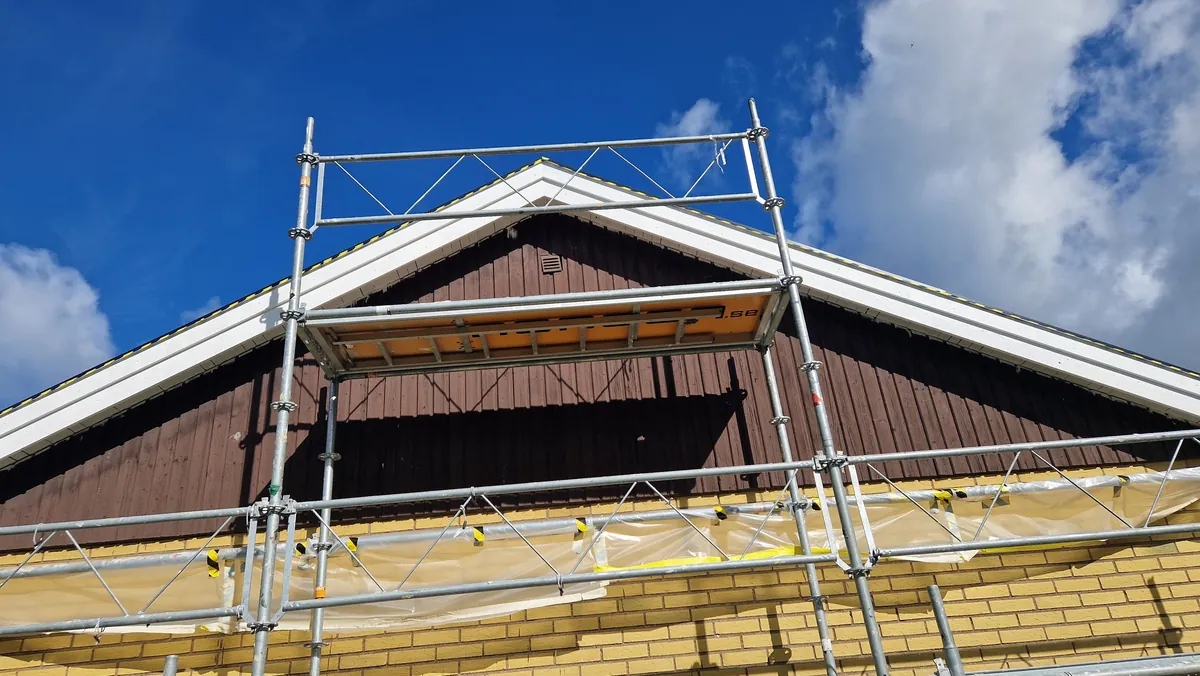
Rendered façade and scaffolding along a detached house in Ängelholm.

Project photo from Ängelholm during façade renovation.

Local repairs may be suitable when the remaining render is sound and the defect can be addressed; widespread detachment, recurring cracks or underlying defects need assessment before choosing local repairs or more extensive replacement. No universal percentage decides the scope.

Quick answer

Base repair or replacement on the cause, extent and condition of the render and wall construction. This guide does not establish a 30% damage threshold.

  • Assess adhesion – a hollow sound can indicate a loss of adhesion; confirm its extent and cause.
  • No universal threshold – assess the sound areas, underlying defects and compatible repair options; no single percentage is decisive.
  • Frost and rust – investigate deep deterioration or corrosion before specifying a surface repair.
  • Compare the scope – compare the actual repair and replacement scope, including access and underlying defects.
  • ROT tax deduction on labour – up to 30% of qualifying labour may be deductible if the customer, property, work, tax capacity and allowance meet the conditions; materials are excluded.

When is repairing render enough, and when must the façade be replaced?

Local repair may be appropriate when the cause is addressed and surrounding render is suitable for retention, but widespread defects require an assessment of the wall and repair options. The decision cannot be reduced to a percentage of visible damage.

The cause and extent of defects, the condition of retained material and the wall construction guide the decision. A qualified assessment should define what can remain and whether local repairs will address the problem.

Widespread detachment, deep deterioration or signs of corrosion warrant investigation. They do not automatically require replacing every wall; establish the cause and extent before specifying work. For paint-system selection, see mineral versus plastic-based paint on render.

Different elevations may need different work, but the scope should follow the actual assessment. For repair and painting enquiries, see complete façade renovation, while work on masonry walls is described on the page for local rendered and brick façades.

Repair and painting planning checklist

Assess → define repairs → specify preparation → check curing → prime where required → coat as specified. Assess the condition and defect causes before choosing repairs or replacement. Identify the areas that can safely remain, compatibility of repair materials and any underlying moisture or structural issue. A fixed 30% threshold is not an established rule for this decision.
Repair or replace: assess the wallDecision checklist: investigate the defect, assess sound and detached areas, identify underlying issues and compare suitable repair options. No universal percentage determines repair versus replacement.REPAIR OR REPLACE: ASSESS THE WALLRepair: damaged areaAssess cause and extentReplace: widespread detachmentdetachment across large continuous areasReplace: frost damagefrost damageReplace: corrosionrusting reinforcement
The appropriate scope follows assessment of the cause, condition and wall system.
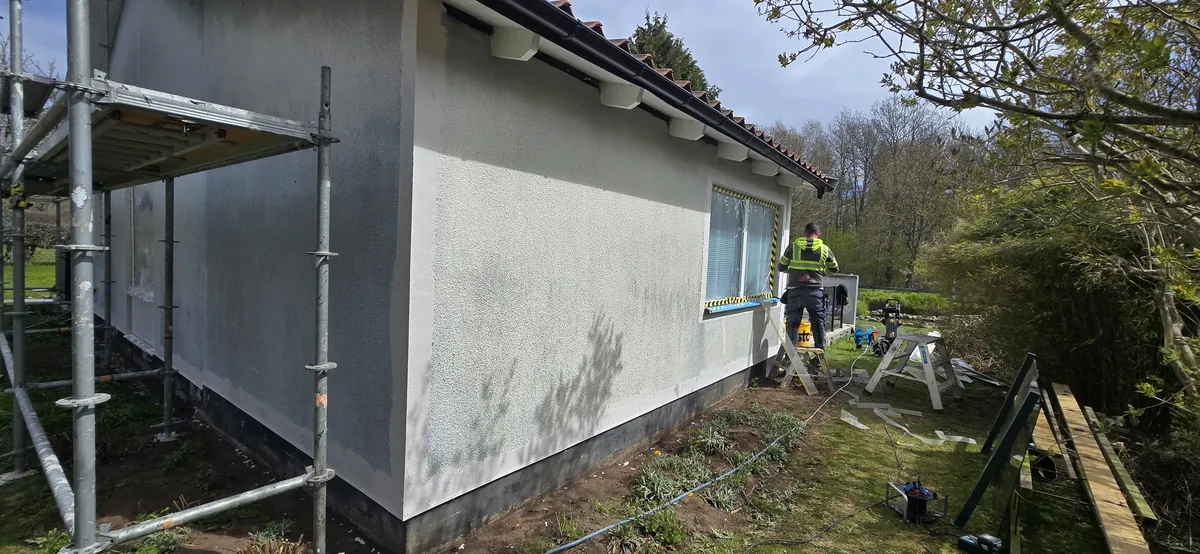
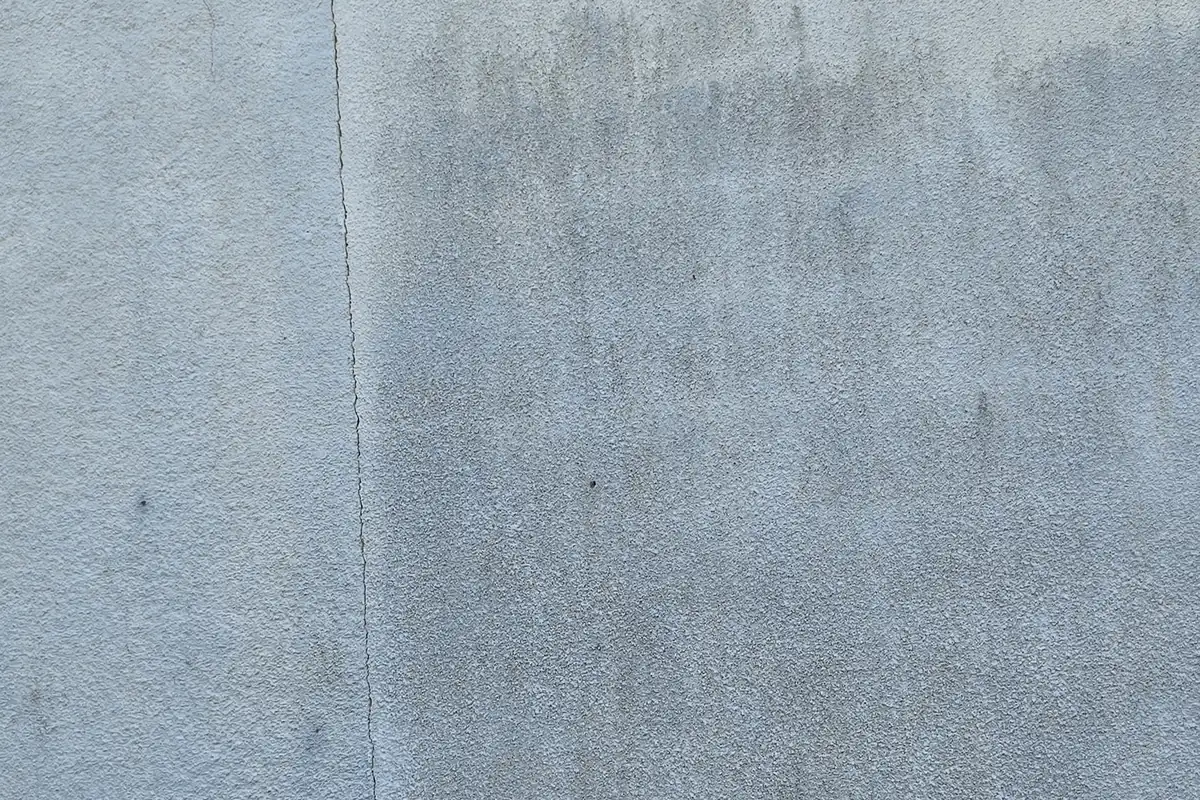
Light-coloured rendered wall with visible discolouration and uneven areas in Ängelholm.
Project photo from Ängelholm. The condition of the surface finish needs assessing before a new treatment.

How do you know whether a rendered façade needs replacement?

Cracks, detached material, hollow-sounding areas or recurring damp indicate a need for assessment; record the location and changes, then have the cause and repair scope established. Several symptoms do not automatically prove that all render needs replacement.

Look at adhesion, cracking, detached areas, moisture signs and the coating condition together. Testing should suit the wall system and avoid damaging unstable material.

No single symptom should be ignored or treated as a complete diagnosis. New or changing cracks, loose material and water ingress warrant timely assessment.

How do you know whether a rendered façade needs replacement
SignsWhat it meansLikely action
Hollow sound when tappedRender has separated from the wallAssess the necessary repair extent
Through-cracksWater reaches behind the renderRepair or replacement
Render flakes off in sheetsInvestigate the cause of detachmentAssess coating and render condition
Salt depositsMoisture is moving through the mortarMoisture investigation before work
Chalking and discolourationAssess the coating conditionDetermine preparation from assessment

Interpret signs together and investigate their cause. Flaking, chalking or hollow sounds may have different explanations. Do not prescribe new render, paint removal or repainting solely from a symptom list.

Five condition signs and likely actionsFive observations for assessment: hollow sounds, through-cracks, detached material, salt deposits and chalking. Confirm causes before selecting repair, investigation or repainting; these are not automatic action rules.FIVE CONDITION SIGNS AND LIKELY ACTIONSChalking and discolourationDetermine preparation from assessmentSalt depositsMoisture investigation before workThrough-cracksRepair or replacementRender flakes off in sheetsAssess coating and render conditionHollow sound when tappedAssess the necessary repair extent
These observations identify questions for an assessment, not a reliable severity ranking by themselves.

What does repairing a rendered façade cost compared with replacement?

The cost comparison depends on the actual repair and replacement scopes, including preparation, compatible materials, access and any underlying work. Obtain like-for-like itemised quotes rather than assuming one method always costs less.

Area, condition, access and the repair specification affect cost. Any ROT applies only to qualifying labour when the conditions are met. A quotation for rerendering the entire façade must state removal, new render, finishing and any other included work. Compare this with a properly specified repair option; no 30% threshold decides the financial choice.

In 2026, eligible customers may receive ROT of up to 30% of qualifying labour, capped at 50,000 SEK per person per year. Two owners must each qualify, pay their share and have sufficient tax capacity and allowance; two adults living in the house is not enough on its own. Materials are excluded. For the relevant surface rates, see façade renovation price list. If comparing render with entirely new timber cladding, corresponding rates are in our timber cladding replacement price list. The exact amount is fixed after a site visit, because a sound house and a frost-damaged 1930s house need very different work.

ROT deduction for render work in 2026

Conditional ROT example: up to 30% of qualifying labour within the 50,000 SEK personal ROT cap. Two owners must each qualify, pay their share and have sufficient tax capacity and allowance; materials are excluded.

ROT deduction on labour costs30 per cent
Annual cap per person50,000 SEK
Two fully qualifying ownersUp to 100,000 SEK, subject to individual eligibility
Excluded: materialsmortar, primer and paint
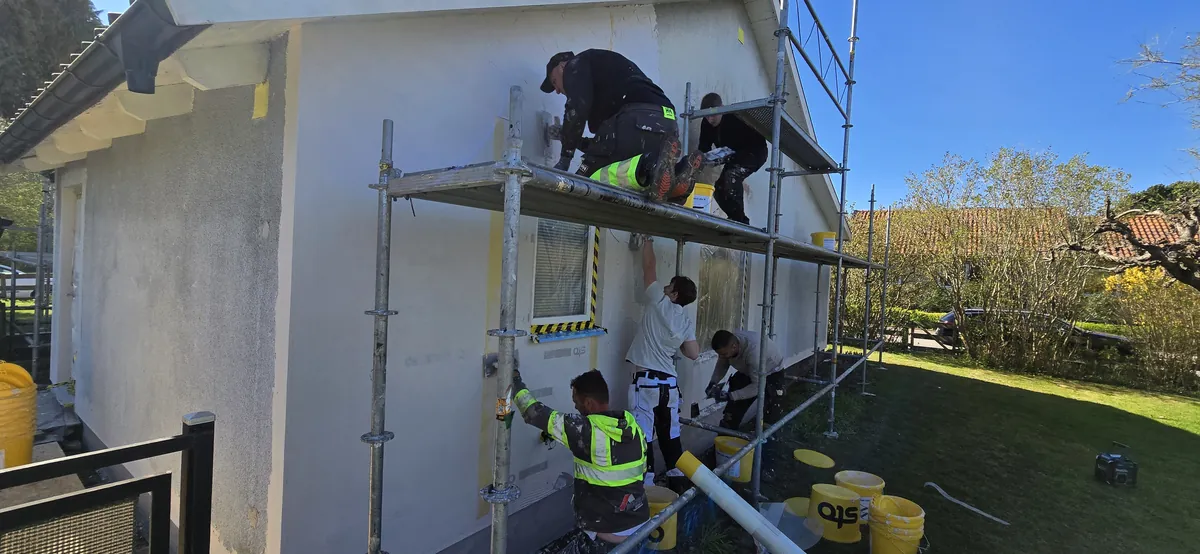
Work from scaffolding beside light-coloured rendered walls in Ängelholm.
Project photo from Ängelholm showing exterior wall work from scaffolding.

How long does a rendered façade last?

The service life of a rendered façade depends on its construction, materials, exposure, detailing and maintenance. The present condition and defect causes guide repairs; age alone does not establish the remaining life.

Durability depends on addressing underlying defects and using compatible repairs and coatings. Replacing render does not itself remove every moisture or construction issue; the specification must cover the actual cause.

Compare whether each option addresses the defect cause, how much sound material can remain and the maintenance it requires. A budget or arbitrary percentage does not establish suitability. The paint-system comparison explains related coating questions.

Agree the scope and any warranty termsAny warranty period and scope must be stated in the agreement for the actual work. This guide does not confirm fixed warranty durations.AGREE THE SCOPE AND ANY WARRANTY TERMSWritten termsSmaller jobsWritten project termsLarger contracts
Any warranty terms must be confirmed for the agreed scope.

How does NLL Måleri assess whether render can be saved?

Agree the assessment and its scope before ordering render repairs: it should establish adhesion, cracking, moisture concerns and suitable repair options. This guide does not confirm a universal NLL testing procedure or damage threshold.

Use documented observations and any appropriate investigation to support the decision. Ask how these points will be checked for the actual wall:

  1. Assess adhesion using methods appropriate for the existing render system.
  2. Record crack locations and changes, and investigate the cause where needed.
  3. Investigate damp or salt deposits where present; the necessary tests depend on the wall and symptoms.
  4. Map the areas proposed for retention or repair and explain the choice of method.

Ask for a written scope identifying investigation, repairs, materials and painting separately. The evidence should explain why the proposed work addresses the actual defects. Confirm any ROT eligibility, timing and warranty terms for that project; contact 076-227 97 68 to discuss an assessment.

How NLL Måleri assesses whether render can be savedAssessment checklist: check adhesion, record cracks, investigate damp where needed and compare appropriate repair options. No fixed damage percentage or identical test sequence applies to every wall.HOW NLL MÅLERI ASSESSES WHETHER RENDER CAN BE SAVED1Step 1Tapping for detached render2Step 2Crack survey3Step 3Moisture and salt testing4Step 4Compare suitable repair options5Response after the site visitBy agreement
Document the findings and agree the necessary repair scope.

Frequently asked questions

Can you repair and repaint a crack in a rendered façade yourself?
First establish the crack’s cause and the render system. A compatible local repair may be suitable, but moving cracks, deep damage, loose areas or water ingress need assessment. This guide does not provide a universal DIY crack-repair method.
When is repairing a rendered façade no longer worthwhile?
Repair may be unsuitable if it cannot address the underlying cause or retain a sound compatible surface. Compare assessed repair and replacement options; no verified 30% damage threshold determines the decision.
What determines whether I should repair or replace my rendered façade?
The cause and extent of defects, condition of retained material, wall construction, compatibility and access determine the scope. Ask for a documented assessment and compare suitable repair options rather than using one damage percentage.
How can you tell whether render has separated from the surface beneath?
A hollow sound can indicate a loss of adhesion, but it is not a complete diagnosis. Avoid disturbing unstable render and arrange an assessment to establish the extent, cause and safe repair options.

Updated

Request a fixed price

Estimate your project cost

Estimate your project cost

Select the service, scope and customer type. The calculator loads here.

Request a quote