We count visits to see which pages are helpful – nothing is sold on. Privacy policy

NLL Guides

Painting wooden windows indoors: preparation, paint and sequence

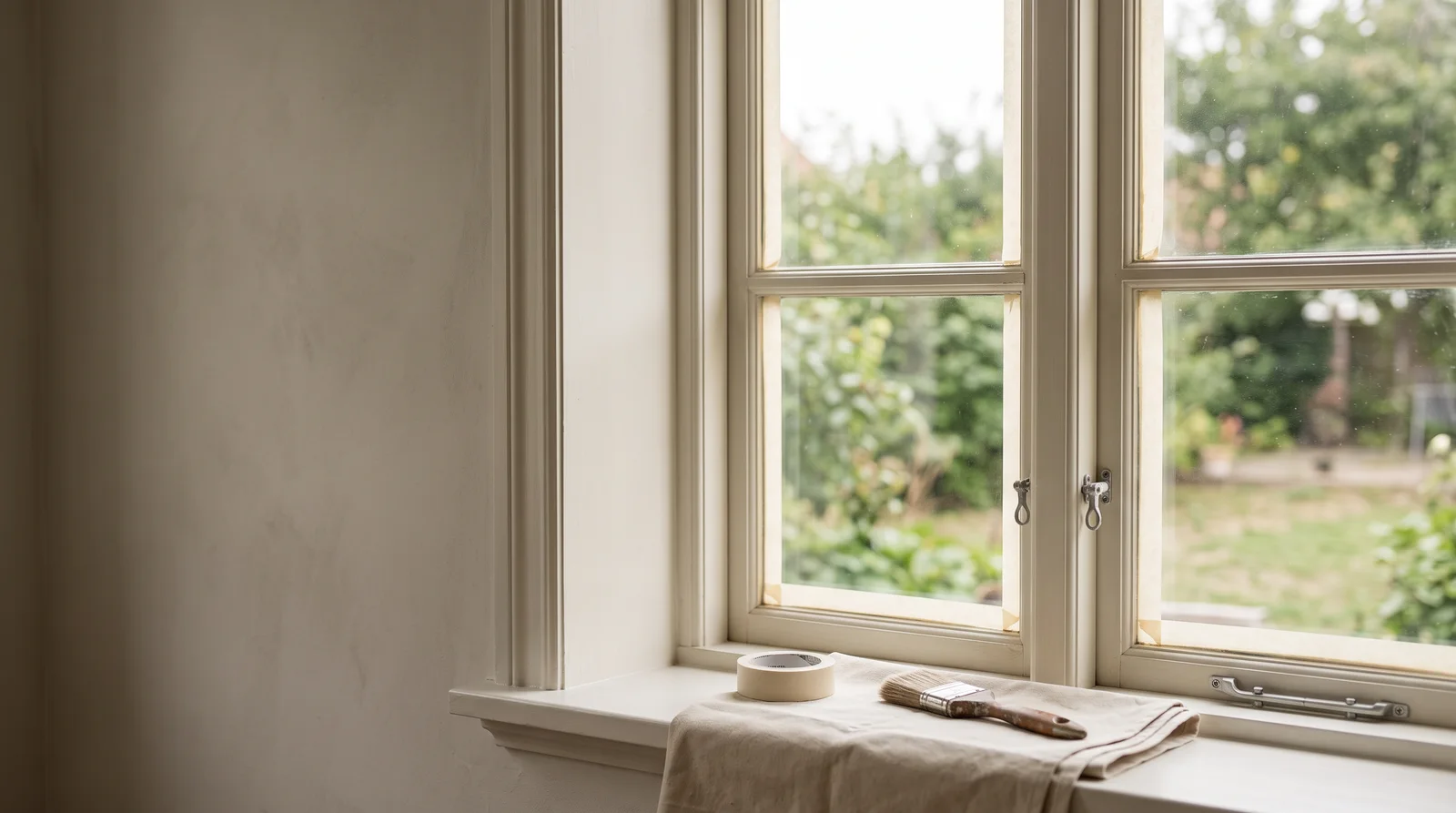
White wooden window seen from indoors, with a brush, tape roll and protective cloth on the sill.

Illustration: the inside of a window before painting.

Start by defining the room-facing window surfaces and identifying their material and previous treatment. Then choose a paint system and preparation for those surfaces. The inside, areas between casements and the exterior should not automatically receive the same paint. This guide helps you describe work on existing wooden windows.

Which parts of the window are internal?

Describe the casement, frame and trim separately, and specify which faces will be painted. This reduces the chance that “one window” means different amounts of work in two quotes.

PartWhat to define
CasementThe wooden section holding the glass; record the number of casements and faces included.
FrameThe surrounding frame; specify room-facing surfaces and any other faces.
TrimThe moulding around the opening; state whether it will be painted too.
WindowsillSpecify separately whether it is included and what material it is made from.
Between casements and outsideDescribe separately from the room-facing surfaces when choosing paint and requesting a quote.

Beckers defines internal window surfaces as those accessible from the room with the window closed. Its guidance distinguishes these from other surfaces that may require an exterior system. Check how the recommendation applies to your window.
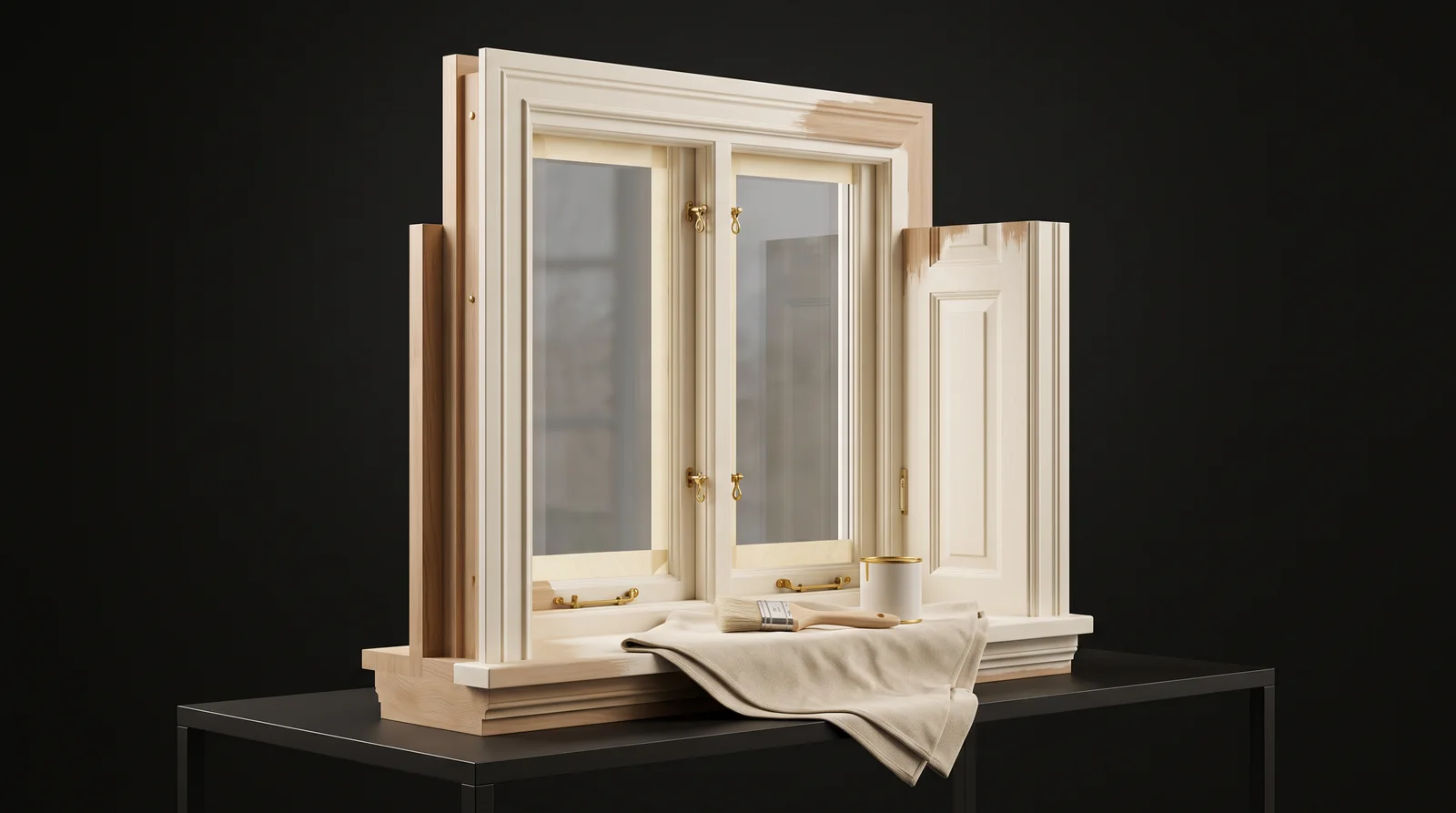
Illustrated wooden window model with a brush and protective cloth on the sill.
Illustration of window parts for planning. Products and treatment must suit the actual window.

Which paint suits previously treated wood?

The paint must suit both the previous treatment and the surface being painted. Find product names from earlier work where possible. Record “unknown treatment” when that information is missing, rather than assuming the surface can be treated as bare wood.

What about stained or oiled windows?

Identify the old treatment before selecting products. Beckers' advice on stained indoor windows explains that previous oil can affect adhesion. Its product recommendation applies to the case described and is not a universal solution for all stained windows.

Can the same paint be used on every part?

Use the same paint only where its intended use and surface requirements match. Interior woodwork paint should not automatically be used on weather-exposed faces. Ask the supplier or contractor to specify the system for each surface when the work covers both inside and outside.

What needs assessment before painting?

Assess the paint and timber before deciding on preparation. Record where paint is lifting, where timber appears damaged and whether the window opens and closes properly.

Photograph the whole window and the details. Suspected damage needs separate assessment; a new colour does not automatically resolve the cause of damage.

If the concern is putty around the glass, see the window putty guide. Define that task separately from changing the interior colour.

Plan protection for glass, hardware, floors and furniture. Check what must be moved for access and whether the room can be used during the work. Follow the selected product's current instructions for cleaning, sanding and any priming.

In what order should you plan the work?

Plan from assessment through to reinstatement. The sequence below helps you commission and follow the work; product instructions determine how each treatment is carried out.

  1. Count windows and casements, and mark the included surfaces.
  2. Identify the material, previous treatment and repair needs.
  3. Select the paint system and decide what must be protected or removed.
  4. Carry out the agreed preparation and any priming.
  5. Paint according to the system's instructions, including drying and recoating requirements.
  6. Reinstate and check the operation of treated parts when the system allows it.

When can the window be closed again?

The time when paint can be recoated is not automatically the time when a window can be closed. Ask for guidance for the selected product and room conditions. Do not plan closing, reassembly or reinstatement around a universal number of hours.

When is window restoration needed instead?

More extensive damage needs to be separated from the painting scope. Identify where the damage is and have repairs assessed before comparing prices.

NLL offers window and door painting with repairs and a separate window restoration service. These scopes should not be compared as the same order. Full restoration needs its own assessed price.

What information is needed for a price?

The price must cover defined parts, faces and tasks. The number of windows alone is therefore insufficient. A quote for internal faces and trim can cover different work from one for all faces and repairs.

NLL's window and door price guide gives labour prices per window and per door. The range for work with repairs is not a fixed price for internal painting alone or for full restoration. Materials and any possible ROT deduction need to be stated separately in the quote.

Checklist: describe your windows

Gather the details below. Checkmarks show what you have prepared for the enquiry; they do not assess the window's condition.

0 of 6 items prepared.

For work in northwestern Skåne, request a quote for window painting. Include the information and identify anything needing assessment. After the work, keep the agreed scope, product names, colour and care instructions for future maintenance.

Request a fixed price

Estimate your project cost

Estimate your project cost

Select the service, scope and customer type. The calculator loads here.

Request a quote