Window putty repairs: how to do it and what replacing putty costs
Dorde Lalic founder and owner of NLL MåleriNLL Måleri · · 6 min readinLinkedIn
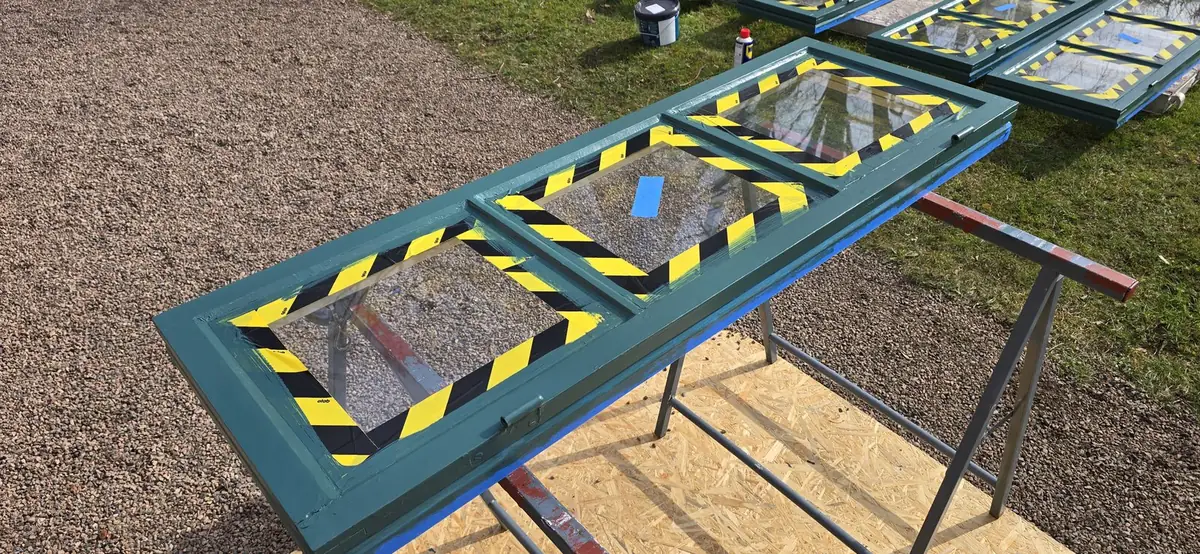
Window sashes prepared for painting. The photo does not show putty being applied.
When window putty comes loose, the damaged area needs removing, the rebate preparing and new, compatible putty shaping against the glass. A local putty repair and full window restoration cover different work. NLL Måleri assesses the price of replacing putty according to the window's condition and the work to be included.
Quick answer
Check the glass, timber and existing putty before starting.
Remove loose putty; firmly bonded putty does not always need removing for a local repair.
Choose putty, pretreatment and paint that work together.
Follow the putty and paint instructions for temperature and overpainting.
Ask for an assessment if the glass is loose, the timber is damaged or several sashes need restoration.
What is window putty?
Window putty seals the joint between the glass and sash in a traditionally glazed window. The outer putty is shaped to direct water away from the joint. A traditional timber window also has bedding putty beneath the glass and glazing pins that hold the pane in place.
Putty repair therefore involves more than filling a visible crack. Check whether the damage is limited to the outer putty or whether the glass fixing and timber also need attention. Windows with glazing beads and other sealing systems should be assessed according to their construction.
How do you replace window putty?
For a local repair, remove loose putty, clean the area, pretreat exposed timber and apply new putty. The steps below apply to a traditionally puttied timber window with secure glass and a sound sash.
Which tools do you need for window putty repairs?
Have a putty knife, a suitable tool for removing loose putty and a soft brush ready. Use eye protection and a stable work surface when working close to glass. Read the chosen putty’s instructions before preparing the glazing rebate.
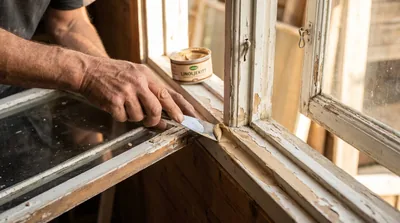
A putty knife shapes the window putty along the timber sash.
Check the damage. Look for cracked glass, loose fitting and damaged timber. Stop the simple repair if the glass needs removing or the sash needs repairing.
Remove loose putty. Work carefully along the edge of the glass. Leave firmly bonded, compatible putty in place where it can form part of the repair.
Clean and pretreat. Brush away dust and prepare exposed timber according to your chosen putty and paint system.
Apply and shape the putty. Fill the joint without leaving gaps and smooth it with a putty knife. Check the contact with the glass and the corners.
Plan the painting. Follow the product instructions for when and how the putty can be painted. No fixed number of waiting days applies to every product.
Anza's guide to applying window putty shows preparation and application. A larger restoration also requires checking the bedding and fixing of the glass; local repair steps do not replace that work.
Can you repair window putty in place without removing the sash?
A small repair may be possible in place if you can safely reach all the damage and the glass is secure. If the pane needs removing, the underside of the sash needs repairing or several sides need work, the sash may need taking down. Assess access before choosing a method.
For a traditionally puttied timber window with secure glass and sound timber. Loose glass or rot needs a more extensive assessment.
Which putty suits an older timber window?
Linseed oil putty is used in traditional timber windows, but the choice needs to suit the glazing, timber treatment and paint. The window's age alone does not determine which putty is suitable.
Check the following before choosing a product:
Which putty suits an older timber window?
Check
Why it is needed
Construction and glazing
A puttied sash and a sash with glazing beads require different assessments
Existing treatment
New putty and paint need to be compatible with what remains
The product's intended use
The packaging should expressly state that it is suitable for the glazing
Pretreatment and overpainting
The instructions determine surface preparation, paint system and waiting time
When can window putty be painted over?
Window putty can be painted over at the time specified for that product and paint system. Two linseed oil putties can have different conditions even when both are used on timber windows.
Overpainting according to the product instructions
The instructions allow immediate painting. If it is not painted immediately, the manufacturer specifies waiting at least two weeks and checking that the surface skin is dry.
Overpaint after drying according to the product sheet. Linseed oil paint may be applied carefully immediately after puttying.
Byggfabriken's window guide distinguishes between putty repair and a larger restoration of the sash, fittings and glass. Match the work to the damage instead of replacing everything out of habit.
How long should window putty dry before painting?
The overpainting time depends on the putty, paint and working conditions. Check the instructions for that combination; some systems allow early painting while others need a longer wait. Putty that is dry to the touch is not automatically ready for any paint.
Choose putty according to the window's construction, treatment and the instructions for the selected paint system.
What does replacing window putty cost?
NLL quotes for replacing putty and full window restoration after assessing the scope. A general per-window price for painting with repairs is not a price for putty work alone or complete restoration.
State how many windows and sashes are involved, where the putty has come loose and whether the glass or timber is damaged. Ask for labour and materials to be separated, and for the quote to specify whether painting, transport or other tasks are included.
Read about window restoration by NLL for that service. The cost calculator shows indicative prices for the work available to select there; it does not replace an assessment of putty replacement or full restoration.
NLL assesses the price of replacing putty and full window restoration according to the scope of work.
When should you leave putty repairs to a specialist?
Get help when the glass is loose, the sash has rot, access is unsafe or the window has a construction you are unfamiliar with. Send close-up photos so the damage can be assessed before the scope is decided.
A small, accessible area of damaged outer putty is a different task from reglazing an entire sash. If painting is also needed, read about painting and repairing windows and doors. For a more extensive assessment of the window, restoration is the appropriate service to discuss.
Frequently asked questions
Can you apply new putty over old putty?
Loose or damaged putty should be removed. Firmly bonded putty can sometimes remain in a local repair if it is compatible with the new treatment. Do not cover a crack without checking what has come loose.
Do you need to prime before applying window putty?
Exposed timber needs the pretreatment specified by the putty and paint system. This may include oil and primer. Do not add or skip a step without checking the chosen product's instructions.
Can I use decorator's caulk instead of window putty?
Do not assume that ordinary decorator's caulk is a glazing product. Choose a product the manufacturer states is suitable for the window's glazing, surface and subsequent painting.
Can you apply window putty in winter?
Window putty can be applied in winter if the working environment meets the product's temperature and moisture requirements. The calendar alone is not enough to decide. Planning may also need to cover removing the sash and protecting the opening.
How do I get a price for my windows?
Send the number of windows, photos of the putty and sashes, and the requested work in a quote request to NLL. This allows putty repair to be distinguished from painting, timber repairs and full window restoration.
Can you repair window putty in place?
Local repair is possible when the glass is secure, the timber is sound and the whole area is safely accessible. Loose glass or damage around several edges needs a wider assessment. The putty instructions determine when the treated area can be painted.