
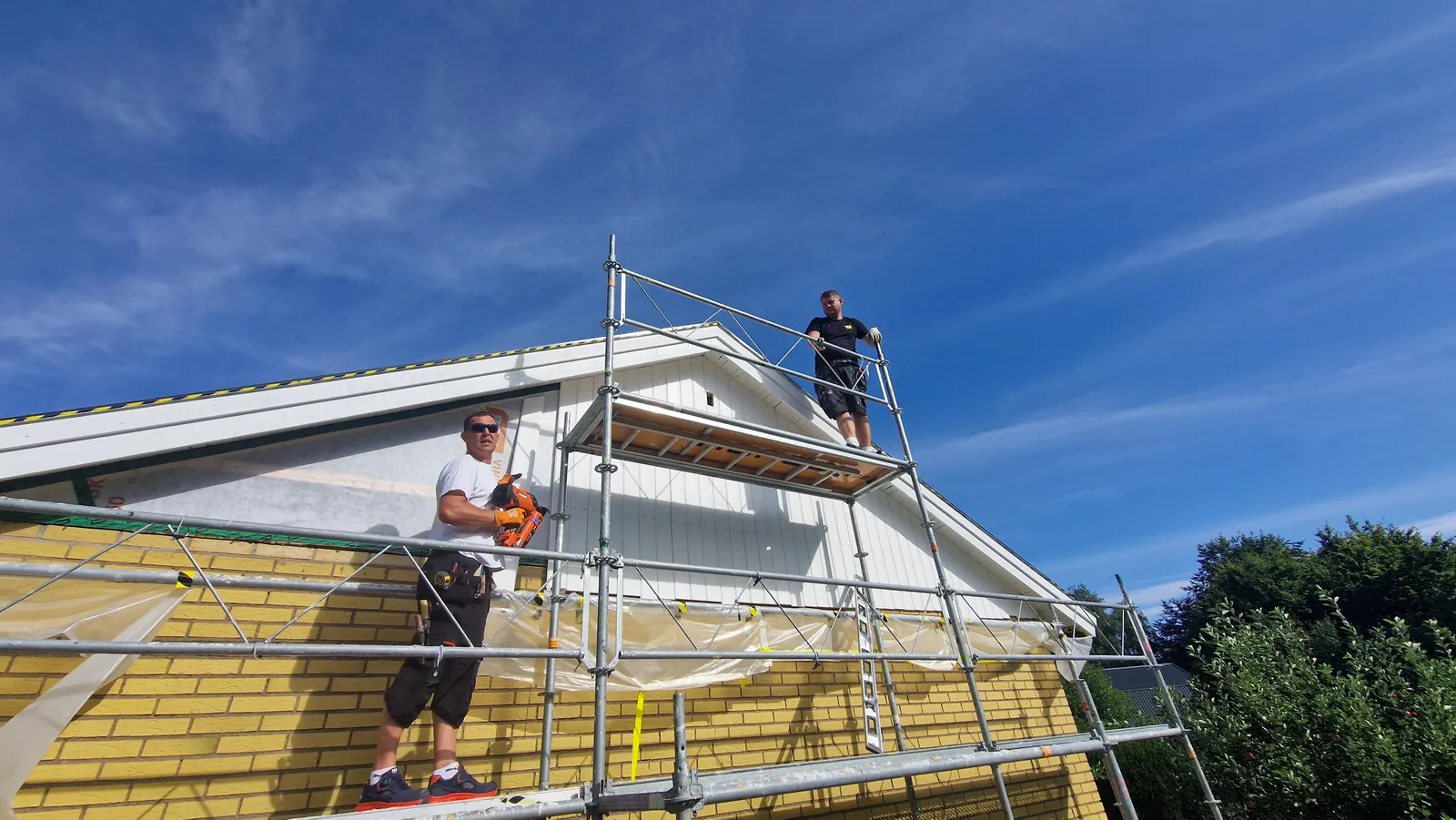
Project photo from NLL’s exterior work in Billinge.
If paint is peeling on timber cladding, remove loose paint and work out why it came away before you repaint. Check whether the damage is confined to one spot or extends across the wall. Moisture, poor adhesion and damaged boards call for different repairs.
Inspect the timber before repainting cladding with peeling paint. Remove loose paint. If the boards are damaged or water keeps reaching the timber, fix the cause before repainting.
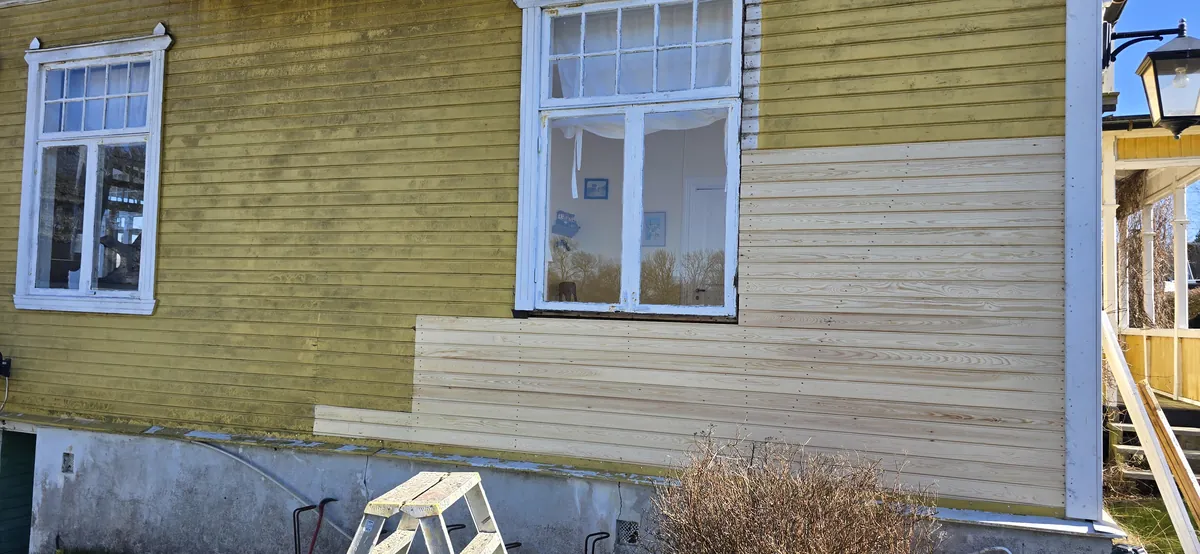
Why does paint peel on timber cladding?
Paint peels when it loses adhesion to the wood or to an older coat of paint. According to TräGuiden’s guidance on paint and moisture, moisture can come from inside or outside. The way wood swells and shrinks also affects how well paint adheres.
Start where the paint has come away. Check the ends of the boards, the joints and the areas below window flashings. Then look across the wall. If the same damage appears in several places, check both the old coating and how water drains away from the cladding.
Can you scrape only where the paint is peeling?
Spot scraping may be enough when the damage is limited and the surrounding paint still adheres. If the coating comes away beyond the visible flakes, check a wider area. Beckers’ guidance on painting timber cladding explains when blistering, cracking or thick layers can call for more extensive removal.
| Sign | Check or action |
|---|---|
| Isolated flakes | Check that the surrounding coating still adheres. Remove loose paint. |
| Blisters or flakes across several boards | Check for moisture and poor adhesion before deciding how much paint to remove. |
| Soft or damaged timber | Assess the boards and check whether they need repair before painting. |
Our guide to scraping paint from timber cladding explains how to remove loose paint and assess which parts of the old coating can stay.
When should you address moisture or damaged timber?
Fix the cause before repainting if the paint peels where water repeatedly reaches the wood or if the cladding itself is damaged. Peeling is a reason to look more closely. The location and condition of the boards help you judge whether the work concerns the coating, a water entry point or the timber itself.
If the timber feels soft or a board is visibly damaged, you may need to replace damaged cladding before painting. Ask for an assessment if several boards are affected or if the paint keeps peeling in the same place.
How do you repaint after removing loose paint?
Repaint once the surface is clean, dry and sound. Choose a primer and topcoat compatible with the timber and the existing coating. Follow the manufacturer’s instructions for drying times, weather and bare timber.
- Inspect the cladding and repair damage where needed.
- Wash it as directed by the coating manufacturer and let it dry.
- Remove loose paint and prepare the edges between bare and painted areas.
- Prime where the coating system calls for it and apply the paint as directed.
TräGuiden’s instructions for preparing painted wood cover cleaning, drying and scraping. If you are unsure how much work is needed, NLL Måleri can assess the surface before exterior painting in north-western Skåne. Request a quote with an overview photo of the cladding and a close-up of the peeling area.
Scraping paint from a facade before repainting
What paint needs removing before repainting a facade? Assess loose coatings, choose tools and check unknown old paint before work starts.
Scraping paint from a facade before repainting
Replace or repaint timber cladding? Costs and a decision guide
Compare repainting, partial replacement and full cladding replacement. See what the price includes and which costs need confirming for your house.
Replace or repaint timber cladding? Costs and a decision guide
Exterior wall maintenance in Skåne: intervals, warning signs and costs
Assess exterior wall condition, warning signs and maintenance needs. See labour and material costs separately for timber, render and brick.
Exterior wall maintenance in Skåne: intervals, warning signs and costs